






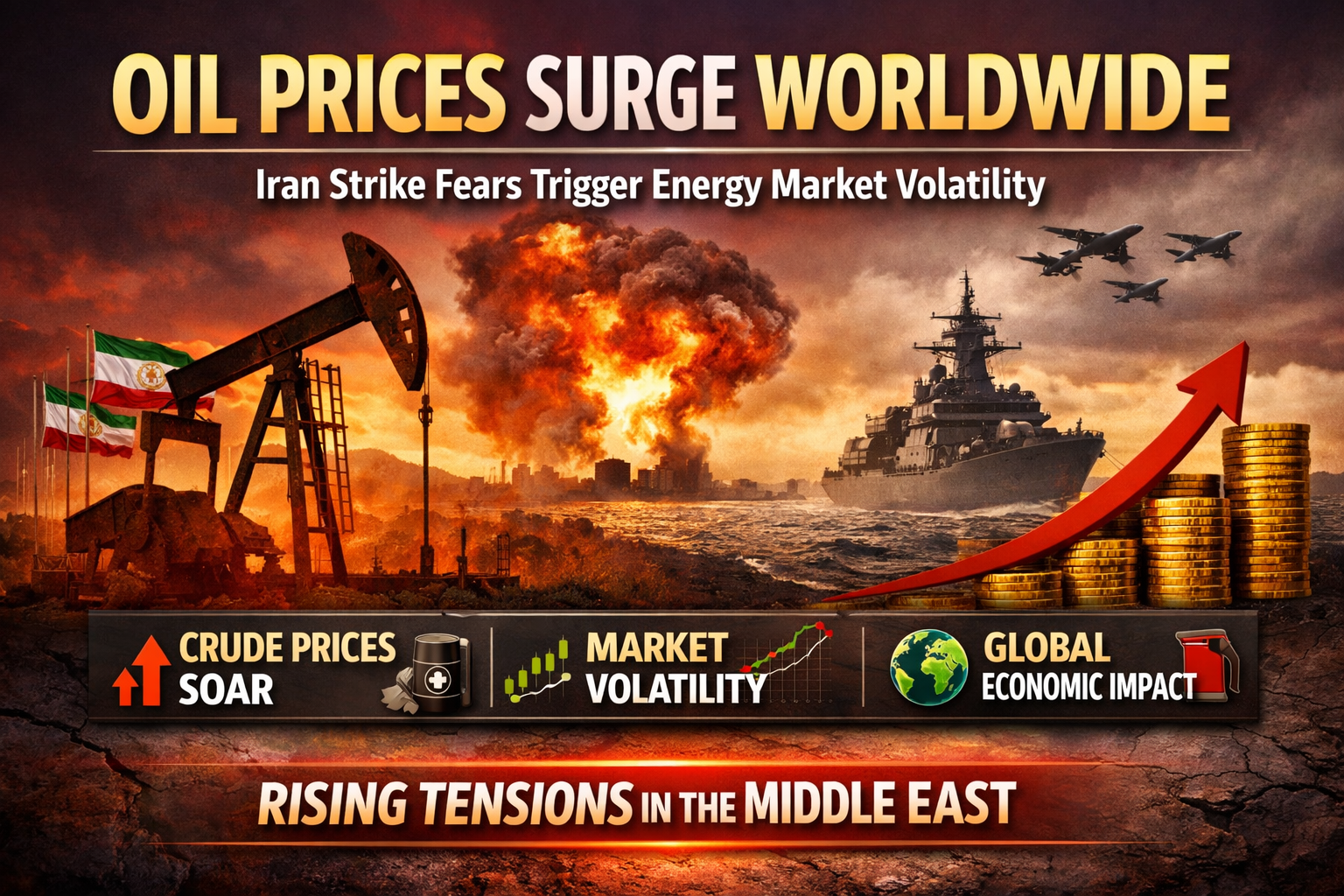
Global oil prices surge worldwide as geopolitical tensions between the United States and Iran intensify. As a result, the energy market is experiencing sharp volatility, while investors are closely monitoring supply risks. The growing fear of a possible military conflict has already pushed crude oil benchmarks higher, and this trend is affecting inflation, stock markets, and fuel costs across the globe.
Why Oil Prices Are Rising Rapidly
First of all, the Middle East plays a crucial role in global oil supply. Any conflict in this region immediately creates uncertainty in the market. In particular, the Strait of Hormuz handles a significant portion of the world’s oil transportation. Therefore, even the possibility of disruption increases the risk premium on crude oil.
Moreover, traders react quickly to geopolitical headlines. Whenever tensions rise, they start pricing in future supply shortages. Consequently, Brent crude and WTI record strong gains within a short period.
Iran’s Role in the Global Energy Market
Iran remains one of the key oil producers in the OPEC+ alliance. Because of this, any restriction on its exports can tighten global supply. In addition, military escalation could affect shipping routes, insurance costs, and regional production facilities.
For example, even a small supply disruption can push oil prices significantly higher. As a result, energy-importing countries face serious economic pressure.
Impact on Global Economy and Stock Markets
Rising oil prices not only affect fuel costs but also influence the broader economy. On the one hand, higher crude prices increase transportation and manufacturing expenses. On the other hand, they slow down economic growth by increasing inflation.
Meanwhile, global stock markets often decline during such uncertainty. Investors move toward safe-haven assets like gold. Therefore, the oil price rally creates a chain reaction across financial markets.
What It Means for India and Other Importing Countries
India and other oil-importing nations face direct consequences when oil prices surge worldwide. For instance, higher crude prices can:
- Increase petrol and diesel rates
- Widen the trade deficit
- Put pressure on the local currency
- Raise daily living costs
As a result, both governments and consumers feel the economic impact.
Winners and Losers in the Energy Sector
On the positive side, oil exploration companies benefit from higher crude prices because their revenues increase. However, refining and marketing companies struggle due to rising input costs.
Similarly, renewable energy stocks sometimes gain attention as countries try to reduce dependence on imported oil.
Future Outlook for Oil Prices
At present, the market remains highly sensitive to political developments. If tensions ease, prices may stabilize. However, if the conflict escalates, oil could reach new highs in 2026.
Therefore, analysts consider the current situation a key factor for the global economic outlook.
Conclusion
In conclusion, oil prices surge worldwide due to Iran strike fears and supply disruption concerns. Consequently, the energy market is facing strong volatility, while inflation risks are increasing. If geopolitical tensions continue, crude oil will remain one of the most closely watched assets in the global economy.